The Case for Cute: Why Embracing Kawaii Is Actually the Most Grown-Up Thing You Can Do
The Lie We've Been Told About Being Serious
Somewhere along the way, American hustle culture decided that adulthood meant stripping the fun out of everything. Your planner has to be minimalist. Your desk has to be clean and neutral. Your tote bag should signal competence, not personality. God forbid you have a little strawberry charm clipped to your laptop case — someone might not take you seriously in the 9 a.m. Zoom call.
But here's the thing: Japanese women — who navigate one of the most demanding, high-pressure work cultures on the planet — never bought into that particular lie. Instead, they developed something entirely their own: kawaii culture. And it's not what most Americans think it is.
Kawaii Is Not What You Think It Is
When most people in the US hear "kawaii," they picture Hello Kitty lunchboxes and Harajuku cosplay. And sure, those exist. But kawaii — which literally translates to "cute" or "adorable" — is a much broader philosophy about how you move through the world and what you allow yourself to enjoy without apology.
At its core, kawaii is about intentional softness in a hard world. It shows up in the way a woman might choose a pastel-colored IC card holder for her subway commute, or keep a tiny ceramic Shiba Inu on her work desk, or buy the limited-edition sakura-flavored Kit Kat just because it makes Tuesday feel a little more special. These aren't childish impulses. They're micro-decisions to protect your joy.
Scholars of Japanese popular culture — including Sharon Kinsella, whose research on kawaii remains foundational — have long argued that the aesthetic emerged partly as a form of quiet rebellion against rigid social expectations. Young women in Japan found that embracing the soft, the sweet, and the whimsical was a way to carve out emotional space that the dominant culture wasn't offering them. Decades later, that instinct hasn't gone anywhere. It's evolved.
The Emotional Intelligence Behind "Cute"
Let's be real: life is a lot right now. Whether you're managing a full-time career, a side hustle, a relationship, a family, or just the general chaos of being a person in 2024 — the weight is real. Burnout is not a personality quirk; it's an epidemic.
Japanese women have understood for generations that you cannot white-knuckle your way through a demanding life without giving yourself something tender to hold onto. Kawaii culture is, in many ways, a sophisticated emotional regulation strategy dressed up in pastel packaging.
Think about it this way: when you deliberately choose the mug with the little bear face for your morning coffee, you're not being silly. You're creating a small, reliable moment of delight in a day that might otherwise offer very little of it. When you buy the notebook with the embossed cat on the cover instead of the plain black one, you're telling yourself — quietly, privately — that your daily work deserves to feel good, not just functional.
That's not regression. That's wisdom.
Why American Women Are Exhausted by Performing Seriousness
Here's what's fascinating: American women are increasingly burning out not just from the workload, but from the performance of professionalism itself. The pressure to appear unflappable, hyper-competent, and aesthetically neutral at all times is genuinely draining. We've been told that softness reads as weakness, that liking pretty things is frivolous, and that ambition and playfulness cannot coexist in the same body.
Kawaii philosophy pushes back on all of that. It says: you can be completely capable and also have stickers on your water bottle. You can be a serious professional and also light up when you find a planner in your favorite color. These things are not in conflict.
And the data, honestly, backs this up. Research in environmental psychology consistently shows that people who personalize their workspaces — with objects that have emotional meaning, visual warmth, or aesthetic pleasure — report higher job satisfaction and lower stress levels. Kawaii, at its most practical, is just applied environmental psychology with better aesthetics.
How to Bring Kawaii Into Your Life Without a Full Personality Overhaul
You don't have to go full Harajuku to tap into this philosophy. Kawaii is scalable. It meets you where you are.
Start small and intentional. Pick one object in your daily routine — your coffee mug, your phone case, your keychain — and swap it for something that genuinely makes you smile when you see it. Not something you think you should like. Something that actually sparks a little flicker of happiness.
Audit your digital space. Your phone's wallpaper, your desktop background, the icons you stare at for hours — these are part of your visual environment. Kawaii culture pays attention to this. A soft, illustrated background or a widget in a color that makes you happy is not a distraction. It's a design choice that affects your mood.
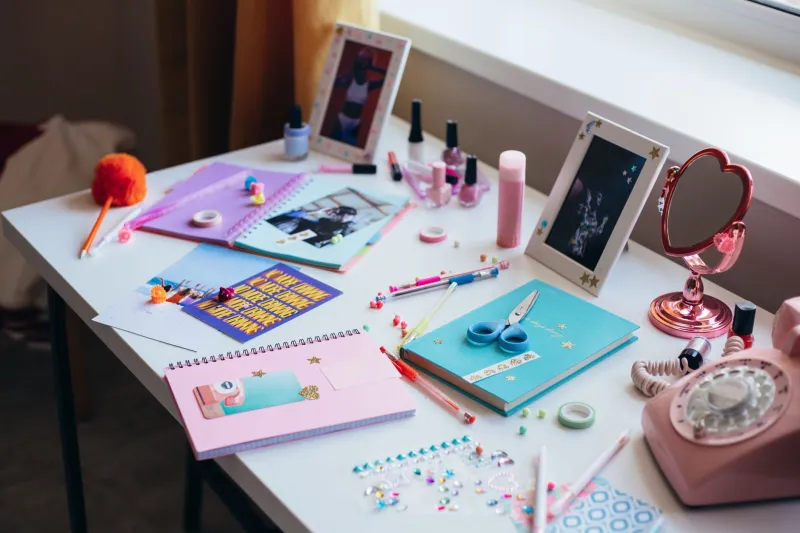
Give yourself permission in the stationery aisle. This is a low-stakes, high-reward entry point. Japanese stationery culture is legendary for a reason — Midori, Muji, Hobonichi — and you can find affordable versions of that aesthetic at places like Daiso (if you're lucky enough to have one nearby) or through countless small shops on Etsy. A beautiful pen or a patterned sticky note pad costs almost nothing and delivers disproportionate daily joy.
Stop editing yourself in public. This is the harder one. The internal work of kawaii culture is learning to stop apologizing for what you find delightful. You don't have to explain your Totoro tote bag. You don't have to justify the charm on your AirPods case. You're allowed to like what you like without a defense prepared.
Joy Is Not Juvenile — It's Resistance
In a culture that profits from your exhaustion and self-seriousness, choosing delight is genuinely countercultural. Japanese women figured this out a long time ago, and they built an entire aesthetic movement around the idea that softness is not a vulnerability — it's a practice.
Kawaii culture, at its best, is not about being childlike. It's about refusing to let the world's demands strip you of the parts of yourself that still know how to be charmed by something small and lovely. It's about building a life where Tuesday morning feels worth showing up for, not just because of what you accomplish, but because your coffee mug made you smile before you even opened your laptop.
That's not immaturity. That's a radical act of self-preservation. And honestly? It looks really good on you.