The Graceful Exit: Mastering Japan's Art of the Gentle No
There's a moment most of us know well. Someone asks something of you — a favor, a date, a commitment you absolutely cannot take on right now — and you freeze. You either blurt out a hard no that feels rude, or you say yes when you desperately mean no. American culture doesn't leave a lot of room in between.
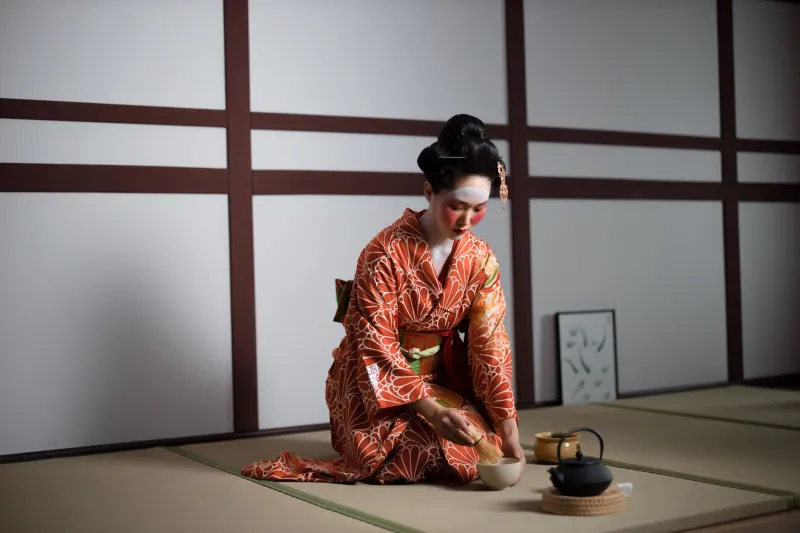
Japanese communication culture, on the other hand, has spent centuries building that in-between space into something almost architectural. It's called enryo — a kind of deliberate restraint — and paired with the art of tatemae (the social face we show the world), it creates a whole vocabulary of refusal that doesn't read as refusal at all. Not deception, exactly. More like... social choreography.
And honestly? It's kind of genius.
What "Maybe Later" Actually Means
If you've ever spent time with Japanese friends or colleagues, you may have noticed that a direct "no" is almost never the first move. Instead, you get the long inhale through the teeth. The slow, thoughtful "sou desu ne..." (something like "well, you see..."). The phrase "chotto muzukashii" — literally "a little difficult" — which is, in practice, a complete and total refusal wrapped in the softest possible packaging.
The beauty of this system isn't that it avoids conflict forever. It's that it gives everyone involved a graceful exit ramp. The person asking can choose to read the signal and back off without anyone losing face. The person declining doesn't have to perform a confrontation to protect herself.
For American women who've been conditioned to either over-explain their nos or apologize profusely for having needs at all, this is practically revolutionary.
The Strategic Pause (And Why Silence Isn't Rude)
One of the most underused tools in the soft refusal toolkit is simply... waiting. In Japanese conversational norms, silence is not an awkward void to be filled. It's communicative. A long pause before responding to a request signals that the matter is being taken seriously — and also that the answer might not be what the asker is hoping for.
American women are often socialized to rush to fill silence, especially in social or romantic situations. We apologize, we over-explain, we laugh nervously. But practicing the deliberate pause — especially in text conversations where we feel pressure to respond instantly — can be surprisingly powerful.
Try it next time a coworker slides an extra project your way. Take a beat. Let the silence do a little work. You might find the other person starts to walk it back before you even have to say anything.
The Redirect Smile in Dating and Friendship
In dating contexts, Japanese women often deploy what could be called the redirect smile — acknowledging a moment without validating it, keeping warmth in the interaction while firmly steering away from wherever things were headed. It's not playing games. It's emotional intelligence with excellent posture.
In American dating culture, there's often this pressure to either explicitly shut something down (which can feel harsh) or laugh it off (which can feel like encouragement). The redirect smile lives somewhere else entirely. It says: I see you. I'm not going there. And we can both pretend this moment didn't fully happen.
With friendships, the same energy applies. When a friend keeps asking you to do something that doesn't work for you — the MLM pitch, the plus-one request to an event you'd hate — repeated gentle deflection ("I'll have to see how I'm feeling," "That week is really packed for me") is a legitimate boundary strategy. You're not lying. You're protecting the friendship from a direct collision.
When It's Okay to Let Ambiguity Do the Heavy Lifting
Here's the part American directness culture tends to push back on: isn't this just... dishonest? Aren't we supposed to communicate clearly?
Maybe. But consider what clarity costs in certain contexts. A hard no to a persistent romantic interest can escalate. A direct refusal to a fragile colleague can create weeks of office tension. There are real situations where ambiguity isn't avoidance — it's strategy.
The Japanese concept of ma, that meaningful space between things, applies here too. The gap between a question and your answer doesn't have to be filled with an immediate verdict. Sometimes the most honest thing you can offer is "I'm not sure yet" — and then let that uncertainty quietly expire.
This isn't a permanent solution to every boundary challenge. But it's a tool. And like any tool, knowing when to reach for it matters.
Bringing It Into Your Actual Life
So how do you actually practice this without feeling fake or passive-aggressive? A few starting points:
In the workplace: Replace "I can't do that" with "That might be tricky given my current bandwidth — can we revisit later in the quarter?" Then don't revisit it. Let it quietly fade.
In dating: If someone is pushing too hard for a second date you don't want, "I've got a lot going on right now" is a full sentence. You don't owe a detailed explanation. The ambiguity is kind, not cowardly.
With family: The eternal "we'll see" is Japanese-style deflection in American clothing. Deploy it without guilt.
In group chats: Reacting with an emoji instead of a word is a legitimate soft exit from a conversation you don't want to have.
None of this is about becoming a different person or suppressing your voice. It's about expanding your range — adding softness to your communication toolkit without sacrificing your actual boundaries.
The Japanese have long understood that how you say no matters as much as the no itself. Your refusal can be firm and kind, clear and gentle, final and graceful. It doesn't have to cost you the relationship to protect yourself within it.
That's not weakness. That's fluency.