Japanese Skincare & Wellness Rituals: We Tested the Trends So You Don't Have to
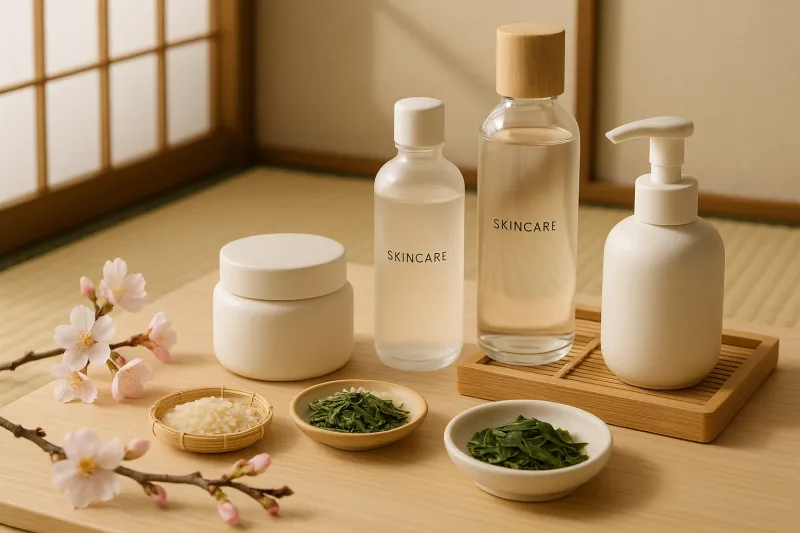
Photo: Japanese skincare routine beauty products flatlay serum moisturizer minimalist, via buymejapan.com
Open any American beauty editor's Instagram right now and you'll find at least one post about a Japanese skincare product, a yuzu bath soak, or someone's four-step essence routine inspired by a Tokyo beauty counter. Japanese beauty culture has officially landed in the American mainstream — and it brought a lot of products with it.
But here's the thing nobody's saying loudly enough: not all of it is worth your time or your money. Some of these rituals are genuinely life-changing. Others are wellness-adjacent marketing dressed up in beautiful packaging. We talked to dermatologists, Japanese beauty insiders, and everyday American women who've been incorporating these practices into their routines — and we're giving you the honest breakdown.
The Glass Skin Philosophy: Real Ritual or Instagram Aesthetic?
Let's start with the one everyone's talking about. "Glass skin" — that luminous, pore-minimized, almost translucent glow — has become the holy grail of American skincare aspirations. It originated in Korean beauty culture but has deep roots in the Japanese concept of mochi hada, or "rice cake skin": soft, plump, bouncy, and radiant.
The approach behind it is less about products and more about consistent hydration layered over time. Japanese skincare philosophy operates on the principle that skin health is cumulative. You're not fixing problems; you're preventing them — starting early and maintaining faithfully.
What actually works: The layering method — applying lightweight hydrating toners (called lotion in Japan, confusingly) before serums and moisturizers — genuinely does improve skin texture and glow over time. Dermatologist Dr. Keiko Tanaka, who practices in San Francisco and grew up in Osaka, confirms it: "The multi-layering approach allows each product to absorb fully before the next is applied. It's more effective than slapping on one heavy moisturizer and hoping for the best."
Products to try: Hada Labo's Gokujyun Hyaluronic Acid Lotion (widely available at Target and Amazon) is a legitimate cult classic. It's affordable, fragrance-free, and genuinely delivers on plumping. Pair it with a light niacinamide serum and you're doing more for your skin than most expensive Western routines.
The hype part: The idea that you can achieve glass skin in two weeks with a new product launch is marketing fiction. This approach takes months of consistent practice to show results. Anyone selling you a "glass skin kit" for $150 is capitalizing on the aesthetic, not the philosophy.
Double Cleansing: The Ritual That Earns Its Reputation
Double cleansing — using an oil-based cleanser followed by a water-based one — is arguably the most universally validated Japanese beauty practice among Western dermatologists. The logic is sound: oil dissolves oil (sunscreen, makeup, sebum), and a gentle water-based cleanser then removes any remaining impurities without stripping the skin barrier.
American women who wear SPF daily (which, if you're not, please start) have reported dramatic improvements in skin clarity after switching to a double-cleanse routine in the evening.
Accessible entry point: DHC Deep Cleansing Oil has been a Japanese drugstore staple for decades and costs around $28. It removes even stubborn SPF and makeup without leaving a greasy residue. Follow with any gentle, low-pH cleanser — CeraVe Hydrating Cleanser works beautifully and costs under $15.
Verdict: Genuinely worth it. This is one Japanese ritual that requires zero special knowledge, minimal investment, and delivers noticeable results.
The Sunscreen Culture Gap
If there's one area where Japanese beauty philosophy has the most to teach American women, it's sun protection — and the cultural gap here is startling.
In Japan, daily SPF application isn't a "skincare step." It's as automatic as brushing your teeth. Japanese sunscreen formulations are also, frankly, superior to most American equivalents — lighter, more elegant, and designed to be worn comfortably under makeup every single day.
Brands like Biore UV Aqua Rich and Anessa have developed devoted followings among American beauty enthusiasts precisely because they don't leave the white cast, greasiness, or pilling that many domestic SPFs do. Both are available on Amazon, typically for under $20.
"The investment in daily SPF is the single highest-return action in skincare," says Dr. Tanaka. "Japanese women who maintain this habit from their twenties look dramatically different at fifty than women who didn't. It's not genetics — it's discipline."
Verdict: Not hype. This is the ritual. If you take nothing else from Japanese beauty culture, make it this.
Bath Culture (Ofuro): Wellness Practice or Luxury Indulgence?
Japanese bath culture — the ofuro ritual — is having a serious moment in American wellness spaces. The practice involves a thorough shower before getting into the bath (the bath is for soaking and relaxing, not cleaning), soaking in hot water for 15-20 minutes, and using the ritual as a deliberate transition between the day and rest.
American wellness brands have latched onto this with yuzu-scented bath salts, bamboo bath trays, and elaborate soak kits that can run $80 and up.
What the research says: Soaking in hot water before bed genuinely does support sleep quality. A study published in Sleep Medicine Reviews found that warm baths taken 1-2 hours before bedtime lower core body temperature in a way that signals the brain toward sleep. Japanese wellness culture has known this intuitively for generations.
The DIY reality: You do not need a $60 hinoki wood bath accessory set to benefit from this practice. A 15-minute hot soak with a cup of Epsom salts and a few drops of lavender oil achieves the same physiological effect. The ritual matters; the branded packaging doesn't.
For those who want to lean into the aesthetic authentically, look for yuzu bath salts from Japanese brands like Iroha or Kyosyu Yomogi — both available through Japanese import retailers online, usually for under $15.
Verdict: The ritual is real; the expensive kits are optional.
Gua Sha and Face Massage: Borrowed Practice, Real Benefits
While gua sha has Chinese origins, facial massage has long been part of Japanese beauty routines — particularly the kobido massage technique, sometimes called the "Japanese facelift." The principle: regular lymphatic drainage massage reduces puffiness, improves circulation, and over time, supports muscle tone in the face.
American women have gone all-in on jade rollers and gua sha stones, and while the tools themselves are largely interchangeable, the technique matters enormously. Dragging a cold jade roller over your face without proper technique does very little. Learning the upward, outward strokes of lymphatic drainage — even through a free YouTube tutorial — is where the actual benefit lives.
Verdict: Technique over tools. Learn the method, use whatever tool you have (even clean hands work), and be consistent.
The Honest Bottom Line
Japanese beauty culture isn't a trend — it's a philosophy, and it's one built on patience, consistency, and respect for the skin as something to be maintained rather than fixed. The rituals that translate most powerfully to American life are the ones rooted in that long-game thinking: daily SPF, consistent hydration, gentle cleansing, and genuine rest.
The stuff that doesn't translate as well? The idea that you can buy your way into these results quickly. Japanese beauty culture is, at its core, deeply anti-impulsive. It asks you to slow down, be consistent, and trust the process.
In a country that loves a fast fix, that might be the most radical beauty advice of all.