Less Is More (And More Stylish): Building a Japanese-Inspired Capsule Wardrobe for Real American Life
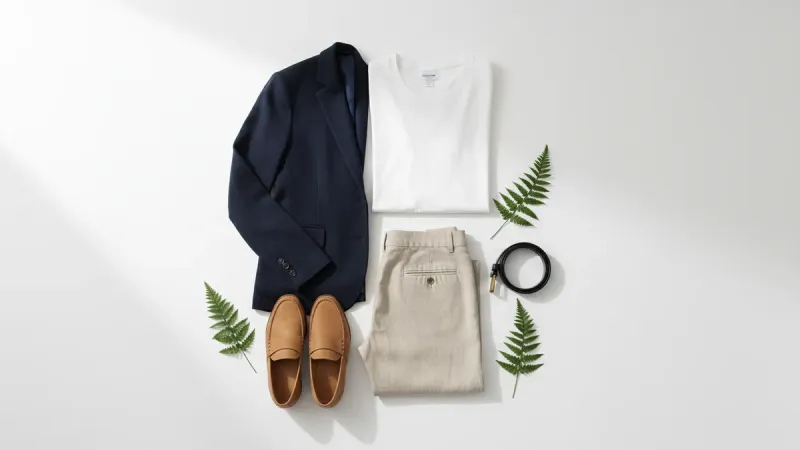
Photo: minimalist Japanese fashion capsule wardrobe neutral basics flat lay, via caffeyolly.com
Let's be honest: most of us have a closet stuffed with clothes and still stand there every morning thinking I have nothing to wear. Sound familiar? You're not alone — and there's a reason Japanese women have been quietly laughing at this problem for decades.
In Japan, the concept of mottainai — a deep cultural resistance to waste — bleeds into everything, including fashion. Combined with the influence of designers like Yohji Yamamoto, Issey Miyake, and the everyday minimalism popularized by brands like Muji and Uniqlo, Japanese style has long operated on a different frequency than the fast-fashion churn that dominates American malls. The idea isn't deprivation. It's intention.
So what does that actually look like when you're living in, say, Chicago or Austin or Portland? We did the work so you don't have to.
The Philosophy First — Then the Clothes
Before you go tossing half your wardrobe into a donation bag, it helps to understand why the Japanese capsule approach works. It's not just about owning fewer things. It's about owning things that talk to each other.
Rie Nakamura, a Tokyo-born stylist now based in Los Angeles, puts it simply: "In Japan, we think about a garment's relationship to everything else we own before we buy it. Americans often think about the item alone. That one shift changes everything."
That shift — from individual pieces to a cohesive wardrobe ecosystem — is the core principle. Every item you own should be able to work with at least three other things already in your closet. If it can't, it doesn't earn a spot.
Your Foundation: The Non-Negotiable Basics
Japanese minimalist wardrobes are built on what fashion insiders call kihon — basics. But these aren't your sad, stretched-out gray tees. We're talking about elevated, thoughtfully chosen foundational pieces that hold up over time.
Here's what a solid Japanese-inspired foundation looks like for American life:
- A structured white or ivory button-down — not oversized-trend white, but a clean, slightly relaxed cut that reads polished at the office and effortless at brunch
- Wide-leg or straight-cut trousers in a neutral — camel, charcoal, or navy work across seasons and dress up or down without trying
- A quality crewneck sweater in one neutral, one muted tone — think oatmeal and dusty sage rather than trendy colors that date quickly
- A versatile midi skirt — Japanese fashion loves the midi length for its quiet elegance; a pleated or A-line silhouette in black or earthy brown earns its keep year-round
- One good coat — this is where Japanese women often invest big. A single well-made coat in camel, black, or charcoal does more work than four mediocre ones
- Dark straight-leg denim — because America runs on denim, and a dark rinse bridges the gap between casual and almost-formal better than anything else
Notice what's missing? Trend pieces. Statement prints. That bodycon dress you wore once. The Japanese capsule approach isn't allergic to personality — it's just strategic about where personality lives.
Mixing Investment Pieces with High-Street Finds
Here's the good news: you don't need to spend a fortune to do this right. Japanese fashion culture actually has a long tradition of mixing price points intelligently. The key is knowing where to invest and where to save.
Invest in: outerwear, quality knitwear, one or two pairs of well-made shoes (a clean white sneaker and a simple leather loafer cover enormous ground), and structured bags.
Save on: basic layering pieces, seasonal accessories, and trend-adjacent items you're not sure will stick around in your personal style.
For American shoppers, this means Uniqlo and COS are your best friends — both brands operate with a very Japanese sensibility around clean lines and quality basics at accessible prices. Layer in one or two pieces from investment brands like Totême, Aritzia's better lines, or even secondhand Japanese brands available on platforms like Depop and Vestiaire Collective.
Mai Yoshida, a Japanese-American content creator in New York who documents her minimalist style on Instagram, swears by this mix: "I'll spend on a Uniqlo cashmere sweater and pair it with a thrifted Comme des Garçons blazer I found for $40. Nobody knows, and honestly, nobody cares. It just looks right."
Dressing Across American Contexts — With Fewer Clothes
One of the biggest concerns American women raise when considering a capsule wardrobe is range. American life demands a lot: gym pickups, work presentations, happy hours, weekend hikes, dinner dates. How does a minimalist wardrobe stretch that far?
The answer is layering and accessorizing with intention — two things Japanese fashion does extraordinarily well.
Take your wide-leg trousers and white button-down. Add white sneakers and a tote bag: that's a Saturday farmers market outfit. Swap in loafers, add a structured blazer, and carry a minimal leather bag: now you're walking into a client meeting. Tuck the shirt, add heeled mules and a simple gold necklace: dinner plans handled.
The same three pieces, three completely different reads. That's the capsule wardrobe working exactly as intended.
For seasonal transitions — something Americans navigate more dramatically than most — the Japanese approach relies heavily on layering rather than seasonal overhauls. A linen shirt becomes a layering piece under a sweater in fall. A midi skirt pairs with tights and ankle boots in winter. The pieces don't change; the combinations do.
Letting Go: The Hardest Part
Building a Japanese-inspired capsule wardrobe isn't just about buying better — it requires editing what you already own. And that part is genuinely hard.
Rie Nakamura recommends what she calls the "three-season audit": pull out everything you haven't worn in three seasons (not one — life is unpredictable) and ask honestly whether it fits the life you're actually living, not the life you imagine. "Japanese women are very honest with themselves about their real daily life versus their fantasy life," she says. "Your wardrobe should dress the real you."
Donate with intention, sell what has value, and resist the urge to immediately fill the empty space. That empty space? It's not a problem. It's the whole point.
The Bigger Picture
Adopting Japanese minimalist fashion principles isn't about becoming someone you're not or stripping your personal style down to nothing. It's about being more deliberate — choosing clothes that genuinely serve your life, buying less but better, and finding a kind of quiet confidence in a wardrobe that just works.
In a culture that constantly tells us we need more, newer, trendier — there's something genuinely radical about saying: I have enough. And it's beautiful.
That's the Japanese way. And honestly? It translates perfectly.