Stop Optimizing, Start Haunting: What Japanese Horror Culture Knows About Mental Health That Wellness Influencers Don't
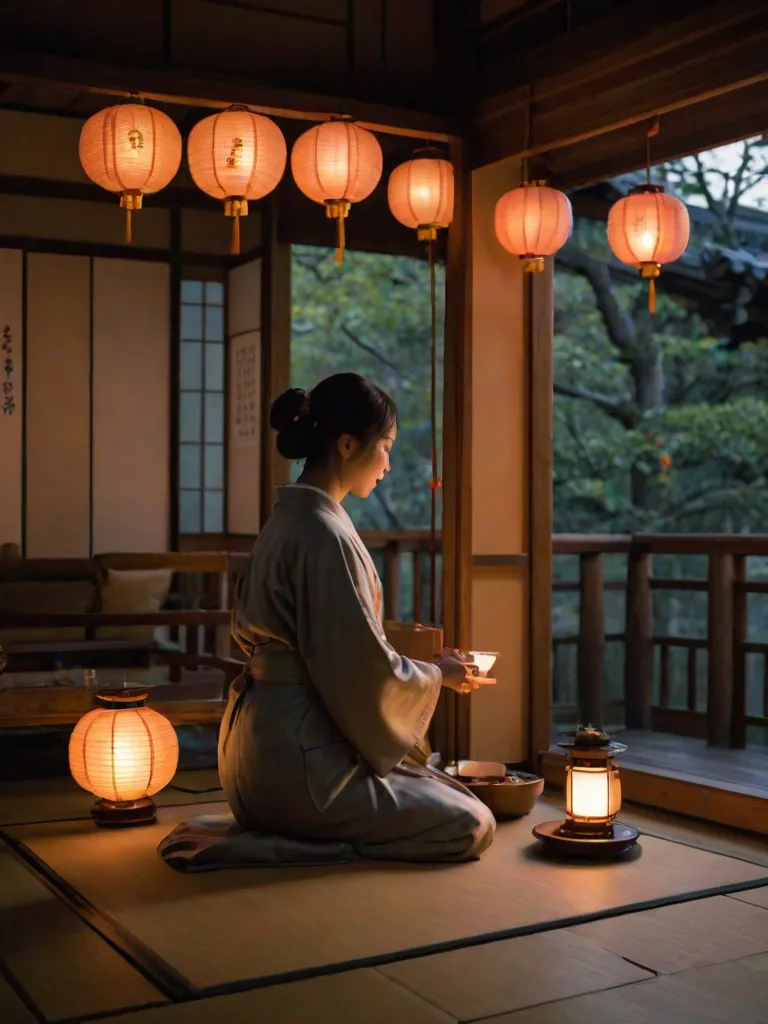
Photo: Japanese lantern atmospheric fog moody woman contemplative night, via data.ipic.ai
Somewhere between your third gratitude journal and your fifth "morning routine for peak performance" YouTube video, a small, uncomfortable thought probably crept in: this isn't actually working. You're still anxious. Still unsettled. Still haunted — and now you feel guilty about it, too.
Here's a wild idea: what if the haunting is the point?
Japan has a centuries-old relationship with the uncanny that American wellness culture has never quite figured out how to sell. Yokai — supernatural creatures ranging from mischievous to genuinely terrifying — aren't villains to be vanquished in Japanese folklore. They're neighbors. They're part of the landscape. And Japanese psychological horror, from the slow dread of Ringu to the suffocating grief of Mononoke, doesn't resolve neatly into lessons or takeaways. It just sits with you, uncomfortable and alive.
That discomfort? It might be exactly what your mental health actually needs.
The Optimization Trap (And Why It's Making Us Worse)
American wellness culture operates on a very specific promise: identify the problem, apply the solution, feel better. Anxiety becomes a breathwork practice. Grief becomes a "processing timeline." Uncertainty becomes a vision board. There's an app for all of it, and a supplement, and probably a limited-edition Stanley tumbler to keep your "calm girl era" hydrated.
The problem is that real psychological health has never worked that way. Therapists have known for decades that avoidance — the clinical term for refusing to sit with difficult emotions — actually amplifies distress over time. When we treat every uncomfortable feeling as a bug to be fixed rather than information to be understood, we don't heal. We just get better at performing wellness.
Japanese horror tradition, in its own strange way, has always known this.
Yokai as Emotional Intelligence
The yokai of Japanese folklore aren't metaphors for evil. They're metaphors for the unresolved. The kuchisake-onna — the woman with the slit mouth — is terror wrapped in a question you can't answer safely. The yūrei, Japan's iconic vengeful ghost, doesn't haunt because she's malevolent. She haunts because something was left undone, unfelt, unacknowledged.
For centuries, Japanese culture has used these figures not to frighten children into obedience (though okay, sometimes that too) but to give shape to the shapeless: grief, jealousy, the specific dread of things left unsaid. Giving a feeling a form — even a monstrous one — is actually a sophisticated psychological move. It externalizes what's internal. It makes the invisible visible enough to look at.
Compare that to the Western wellness habit of labeling emotions only to immediately neutralize them. "I'm feeling anxious, so I'll do box breathing until I don't." There's nothing wrong with box breathing. But there's something worth pausing on in a culture that never asks why the anxiety showed up, or what it might be trying to say.
The Gift of Psychological Horror Films
If you've ever watched a Hideo Nakata film or worked your way through the quieter dread of something like Audition and felt genuinely disturbed for days afterward — congratulations. You've done something that no optimization routine can replicate. You sat with something that didn't resolve. You let it stay uncomfortable.
Research on what psychologists call "benign masochism" — the phenomenon of voluntarily engaging with scary or upsetting experiences — suggests that horror consumption can actually build emotional tolerance. Not because it desensitizes you, but because it gives you repeated, low-stakes practice at surviving feelings that feel unsurvivable. Your nervous system learns, over and over, that the discomfort ends. That you're still here.
Japanese psychological horror is particularly effective at this because it rarely gives you the catharsis of a clean ending. The threat in Ringu doesn't disappear — it multiplies. Mononoke the anime series (not the Miyazaki film, though that has its own dark gifts) forces you to sit inside ambiguity, inside a world where the supernatural and the psychological are genuinely indistinguishable. You don't leave knowing what was real. You leave knowing yourself a little better, because you had to decide.
Mononoke and the Art of Sitting With It
The concept of mononoke — spirits, essences, the animated weight of things that linger — is less about ghosts and more about presence. The idea that objects, places, and relationships accumulate emotional residue. That the past isn't cleanly past. That some things simply are, whether or not we've processed them into a lesson.
This is, honestly, a more honest description of how human psychology actually functions than most wellness content ever gets. Trauma doesn't optimize away. Grief doesn't follow a schedule. The complicated feelings you have about your mother, your body, your career — they don't dissolve because you journaled them out. They linger. They have presence.
Acknowledging that — sitting with the mononoke of your own life rather than frantically clearing them — isn't giving up on healing. It's the beginning of actually doing it.
Practical Ways to Embrace the Uncomfortable (No, Really)
You don't have to become a J-horror connoisseur overnight (though honestly, Audition has been life-changing for many of us — in the best and most unsettling way). But here are a few small shifts inspired by Japan's more honest relationship with the uncanny:
Let the feeling be weird. Instead of immediately reframing a difficult emotion into something manageable, try describing it as if it were a creature. What does it look like? Where does it live in your body? This isn't woo — it's a legitimate therapeutic technique called somatic tracking, and it works partly because it creates distance without dismissal.
Watch something that doesn't resolve. American entertainment is almost constitutionally allergic to ambiguous endings. Seek out films or shows that leave you unsettled. Practice tolerating the open loop.
Give your anxieties a name. Not a cute name — a real one. The Japanese tradition of naming supernatural forces is a way of acknowledging their reality without being controlled by them. Your 3am money spiral has a name. Your imposter syndrome has a face. Name it. See it. Stop pretending it isn't there.
Stop performing calm. The "soft life" aesthetic, the "that girl" morning routine — so much of American wellness culture is about appearing regulated. Japanese approaches to mental and spiritual wellbeing, from the ghost stories told at summer festivals to the melancholy of mono no aware, make space for the fact that life is genuinely, irreducibly strange and sad and sometimes scary. You're allowed to feel that.
The Most Radical Self-Care Is Honesty
Optimization culture wants you to be a better-performing version of yourself. Japanese horror tradition, folk belief, and the whole beautiful, unsettling ecosystem of supernatural storytelling wants something different: it wants you to be real.
Real includes the parts that don't resolve. The feelings that don't have a fix. The lingering presences that no amount of decluttering or morning routines will clear. Those aren't failures of your wellness practice. They're evidence that you're human — complicated, haunted, and worth sitting with.
The yokai aren't coming to get you. They're already here. And honestly? Making friends with them might be the most genuinely healing thing you do this year.