Doing Nothing Is Doing Something: The Japanese Case for Embracing Boredom Without Guilt
Let's be honest: when was the last time you were actually bored? Not doomscrolling-while-pretending-to-relax bored. Not listening-to-a-podcast-while-doing-dishes bored. Actually, genuinely, uncomfortably bored — the kind where you're just sitting there, staring at the ceiling, with nowhere to send your brain?
If you can't remember, you're not alone. American culture has spent the last decade waging a very successful war on boredom. We've got sixteen-minute workouts, commute-friendly language apps, and productivity influencers who have somehow made sleeping eight hours feel like a competitive sport. Busyness isn't just normalized here — it's aspirational.
But here's the thing: a growing number of Japanese women are doing something that looks, from the outside, like absolutely nothing. And it might be the most quietly rebellious wellness move of our time.
What Ma Actually Means (And Why It's Not About Minimalism)
You've probably heard ma (間) tossed around in conversations about Japanese interior design — the idea of negative space, of what's intentionally left empty. But ma is so much bigger than a tastefully sparse apartment.
In its fullest sense, ma is the meaningful pause between things. It's the silence between musical notes that gives a song its emotional weight. It's the breath before you speak that makes your words land differently. It's the gap between stimulus and response where actual thinking — real, unforced thinking — gets to happen.
In a culture that treats every empty moment as a problem to be solved with content, ma is almost transgressive. It asks you to stop treating silence like dead air. To stop treating stillness like laziness. To recognize that the space between the doing is where meaning actually lives.
This isn't woo-woo philosophy. Neuroscience backs it up. Research on the brain's default mode network — the system that activates when you're not focused on a task — shows that this is when your brain consolidates memories, processes emotions, generates creative connections, and builds empathy. You literally cannot access these functions while you're optimizing your morning routine.
Boredom, it turns out, is the brain's loading screen. And we keep hitting refresh before anything actually loads.
Enter Shoshin: The Beginner's Mind That Boredom Unlocks
There's another concept worth knowing here: shoshin (初心), or beginner's mind. It's a Zen idea that describes approaching even familiar things with openness, curiosity, and zero assumptions — the way a child looks at literally everything.
Here's the connection: you cannot access shoshin when your brain is in overdrive. A mind stuffed with podcasts, notifications, and optimized schedules is a closed mind. It already thinks it knows what's coming. It's pattern-matching, not actually seeing.
Boredom cracks that closed system open. When you sit with nothing to do and nowhere to be, your brain starts to wander — and wandering, weirdly, is where shoshin sneaks back in. You notice things you stopped noticing. The way light hits your coffee cup at 9 a.m. The sound the radiator makes. A random memory from seven years ago that suddenly feels relevant. This is not your brain malfunctioning. This is your brain doing its best work.
Why This Hits Different for Women
There's a gendered layer to this conversation that we'd be doing you a disservice to skip.
Women — and particularly American women — are socialized to justify their existence through productivity. Rest has to be earned. Leisure has to be optimized. Even self-care has been repackaged as a performance metric. Your skincare routine has steps. Your meditation has an app. Your vacation has an itinerary.
The result is a specific kind of exhaustion that's hard to name because it doesn't come from doing too much — it comes from never fully stopping. Your body is resting but your brain is always on call, always half-planning, always half-performing.
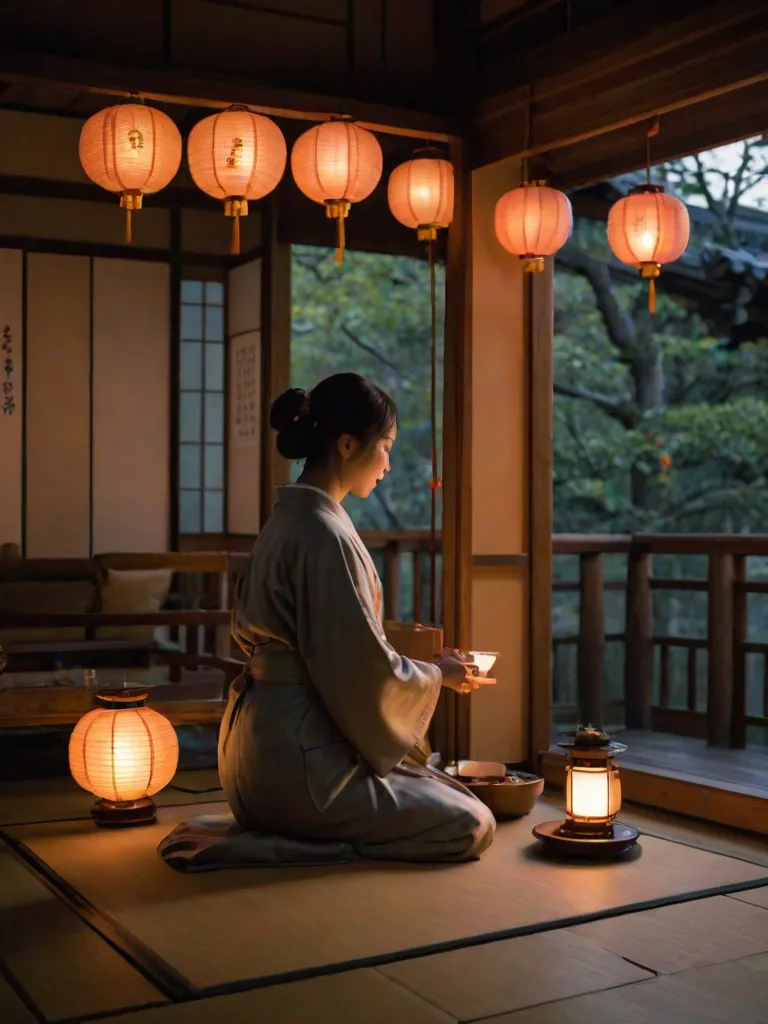
Japanese women aren't immune to this pressure — the concept of karoshi (death from overwork) exists for a reason, and Japan has its own deeply complicated relationship with productivity culture. But there's also a counter-tradition, particularly among women, of protecting small pockets of stillness. Sitting by a window. Watching rain. Letting tea cool while doing nothing but watching it cool.
These aren't Instagram moments. They're not content. They're just... moments. And that's exactly the point.
How to Actually Practice Purposeful Boredom (Without Immediately Reaching for Your Phone)
Okay, real talk: the first few times you try to sit with boredom, it's going to feel awful. Your hands will itch for your phone. Your brain will generate an urgent to-do list out of thin air. You'll convince yourself that this is a waste of time that a more productive person would be using better.
That discomfort? That's the withdrawal. Sit with it anyway.
Here's how to start:
Start with two minutes, not twenty. Put your phone in another room. Sit somewhere comfortable. Look out a window, or just look at a wall. Don't breathe intentionally. Don't manifest anything. Just exist. Two minutes. That's it.
Protect one commute a week from content. If you drive, no podcast, no music. If you take the subway or bus, no earbuds, no phone. Just ride. Watch people. Watch the city. Let your mind go wherever it wants.
Eat one meal without your phone nearby. Not a mindful eating exercise. Not a gratitude practice. Just food, and whatever thoughts wander through while you eat it.
Create a ma moment in your morning. Before you open any app, before you check anything, before you start optimizing — sit with your coffee or tea for five minutes and do nothing. Not nothing meaningful. Just nothing.
None of these are productivity hacks. That's the whole point. They're not going to make you 12% more creative by Thursday. They're going to slowly, quietly give your brain permission to be a brain again instead of a content-consumption machine.
The Radical Act of Being Unstimulated
Here's what nobody's selling you, because there's nothing to sell: boredom is free. It doesn't require an app, a subscription, a retreat, or a special journal. It requires only the willingness to be temporarily uncomfortable in a world that has made discomfort almost completely optional.
In a culture that monetizes every second of your attention, refusing to fill every second is a genuinely countercultural move. It's saying: my mind is not a billboard. My downtime is not content. My quiet is not a problem to be solved.
Japanese philosophy didn't invent boredom, obviously. But it did give us a framework for understanding why the space between things isn't wasted space — it's where the meaning gets made.
So the next time you catch yourself reaching for your phone out of habit rather than need, try this instead: don't. Sit in the ma. Let your shoshin breathe. See what your brain makes when you finally give it room to make something.
It might surprise you. Or it might just feel boring. And honestly? Either outcome is a win.